Connecticut Real Estate Sales Analysis
Connecticut real estate market EDA in Python notebooks using pandas: cleaning, visualization and insights.
Note: To view the full notebook, see analysis.ipynb in this repository.
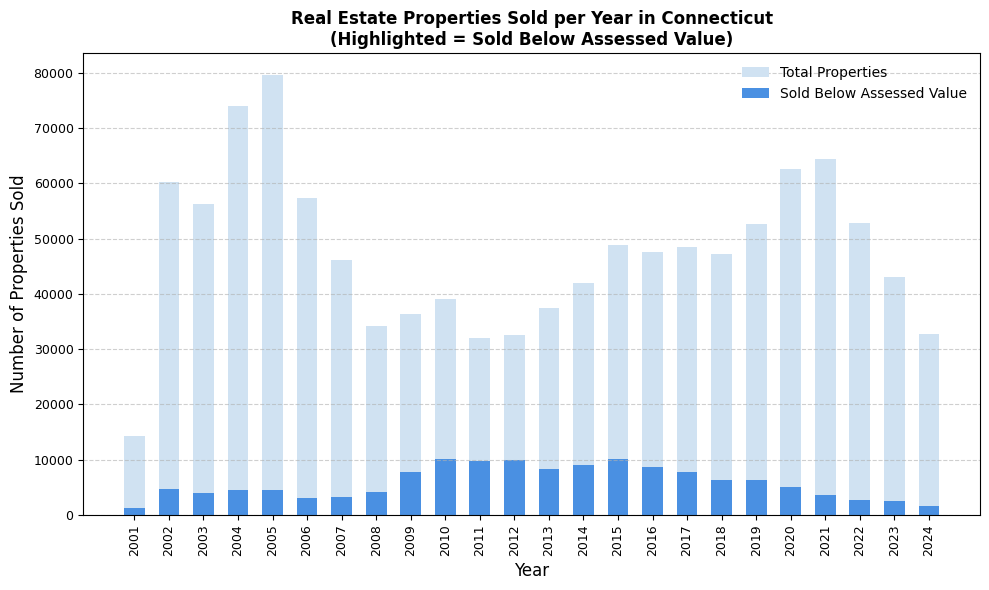
Analysis-1: Analyzing the Number of Real Estate Properties Sold below Assessed Value as Compared to Total Properties Sold by Year
Insights
- Connecticut’s real estate market hit its peak in the mid-2000s but dropped off sharply during the 2008 financial crisis, when many properties sold for less than their assessed values.
- While the market gradually recovered and even surged during the pandemic in 2020–2021, overall sales have slowed noticeably since 2022.
- Still, the number of sales falling below assessed value has stayed relatively low.
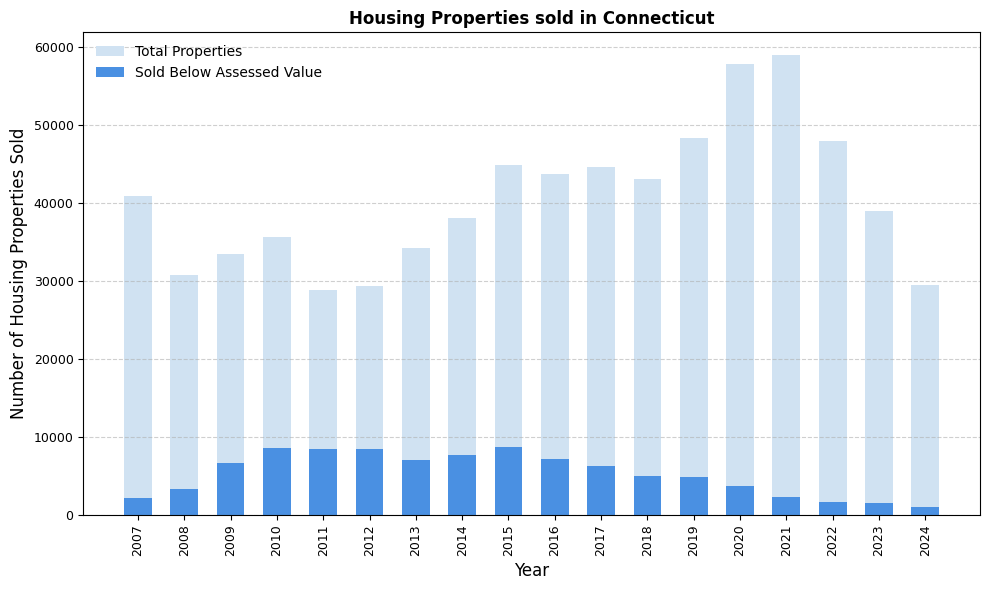
Analysis-2: Analyzing the Number of “Housing” Properties Sold below Assessed Value as Compared to Total Housing Properties Sold by Year
Insights
- Connecticut’s housing market has come a long way since the 2008 financial crisis, when distressed sales were common and many homes sold below their assessed values.
- Although total sales hit record highs during the pandemic, the noticeable drop since 2022 points to cooling demand, likely influenced by rising interest rates and growing affordability concerns in the US as a whole.
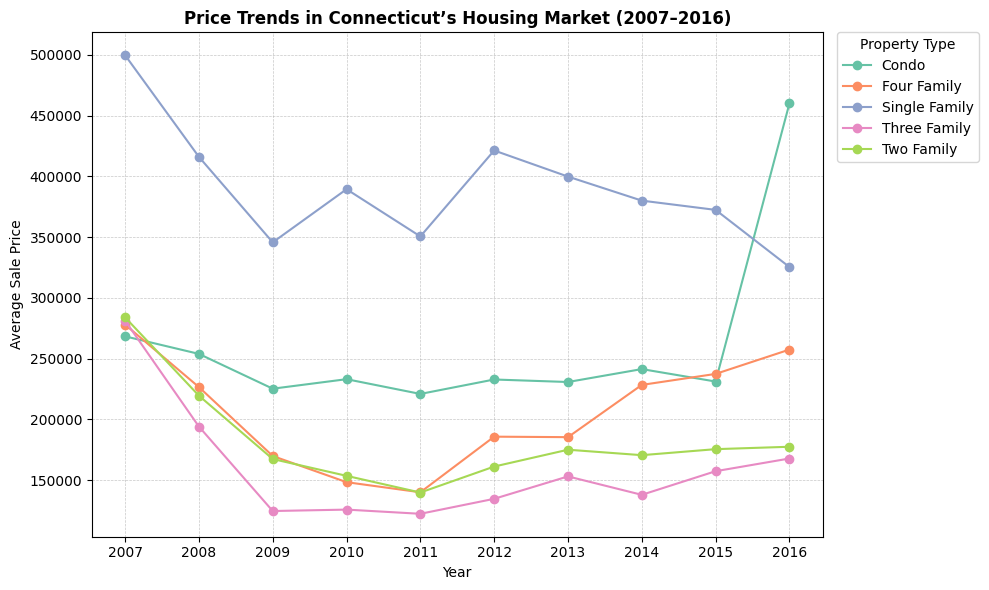
Analysis-3: Analyzing Different “Housing” Property Price Trends over a Decade
Insights
- Over the past decade, Connecticut’s housing market has gradually moved away from being dominated by single-family homes, with condos leading the way.
- Meanwhile, multi-family properties seem to be growing steadliy post the 2008 crisis sell-off.
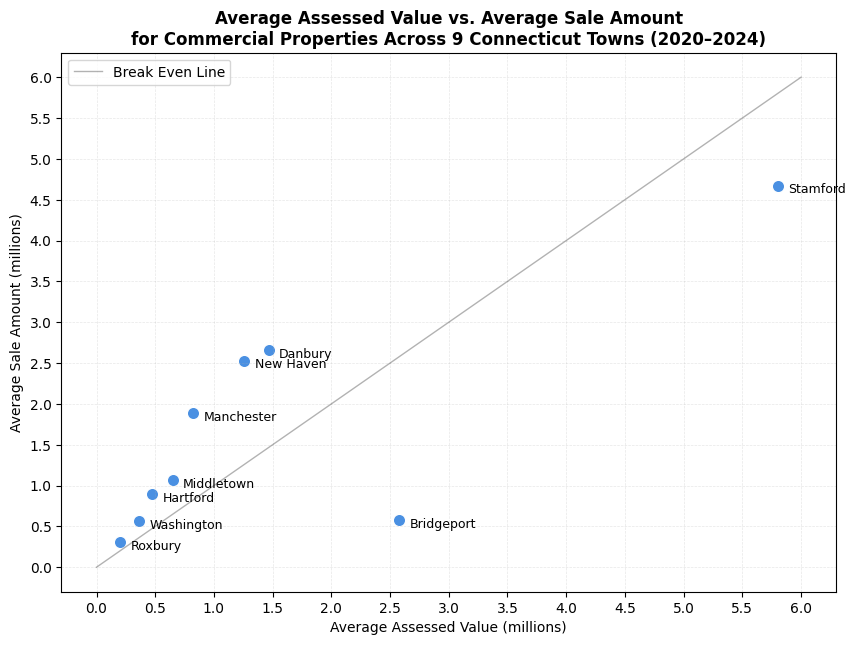
Analysis-4: Analyzing the Relationship between Assessed Values and Sale Amounts for “Commercial” Properties across Towns over the Period 2020–2024
Insights
- Urban centers like New Haven and Danbury seem to have stronger market demand than their assessed property values suggest, while places like Bridgeport and Stamford might be dealing with signs of overvaluation.
- In contrast, mid-sized and growing towns such as Middletown, Hartford, Washington, and Roxbury show consistent trends where sale prices exceed assessments, pointing to steady market performance and potential for stable growth.